Blog 3
Artes Mundi 11 exhibition review:
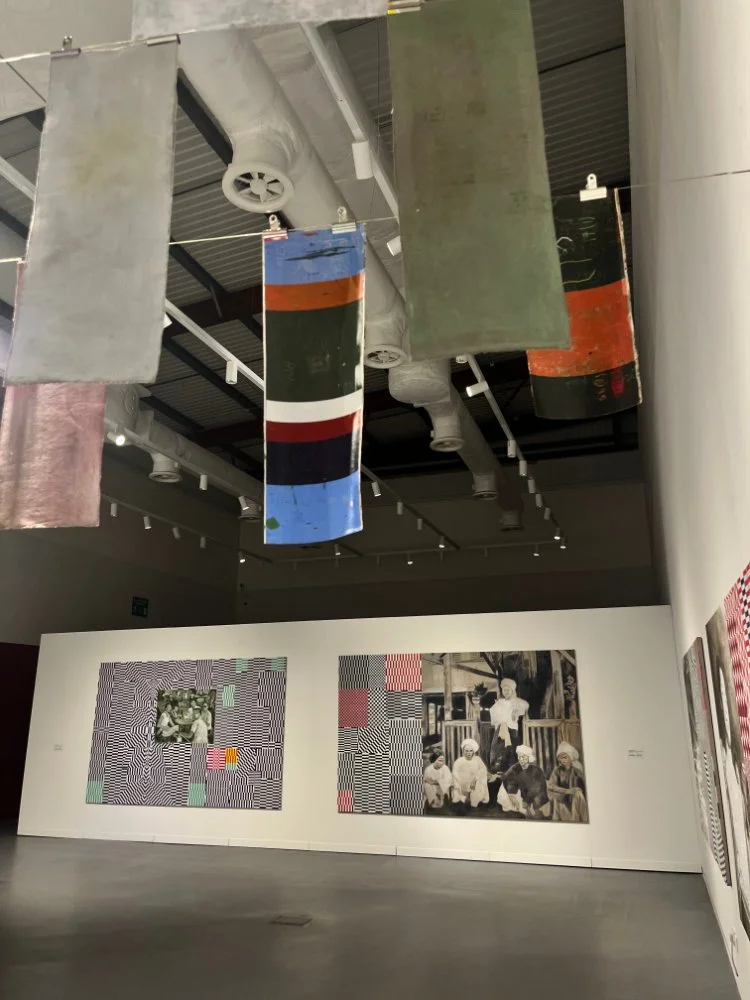
This is both review of the exhibition at Aberystwyth Arts Centre and a reflection of my work in the Arts Centre gallery which I started in August. The exhibition, Artes Mundi, is an art competition based in Wales for artists all around the world. Artes Mundi itself means art of the world in Latin. The competition has been running since 2002 and there's a biannual prize pot that is the largest in value for an art competition in the UK, even higher than the Turner Prize. However, it has never really got as much publicity and traction. The main difference to other prizes is that it’s not just for British based artists, this exhibition of Artes Mundi 11 has six different artists exhibiting their work, who specialise in different mediums, but they are all linked by the theme of humanity and social issues, which Artes Mundi tries to focus on. This 11th edition is also, as it was last time, scattered around Wales at different art institutions. There is a group show in the National Museum in Cardiff, as well as individual shows for each artist at Glyn Vivian in Swansea, Chapter in Cardiff, Mostyn in Llandudno and in Aberystwyth Arts Centre. Here we have the pleasure of two artists, Anawana Haloba and Sawangwongse Yawnghwe.
Anawana is a Zambian artist who now primarily works in Oslo, Norway. The work that she is showing in Aberystwyth is called How to Repair My Grandmother’s Basket: An Experimental Opera. The work is from 2025, and she uses sound which comes from embedded speakers within sculptural forms, like musical instruments, baskets, horns and a calabash. Each object operates as a character with sound emitting from each one individually and they are all collectively on a wooden stage as part of this ‘opera’. The installation is focused on storytelling and music; you are invited to listen and give space to all the voices coming from the stage. The full audio performance lasts 20 minutes so it is quite a long and immersive experience, but you have a printed script as well to read alongside which is useful.
Sawang’s work is primarily paintings that are very large scale, combining quite simple paint-based reproductions of family photos and portraits combined with very abstract and colourful forms that represent décor from rebel factions, patterns on clothing and buildings in Myanmar, which is his birthplace. The other section of his work is called Still Life with Foreign Mud which is from 2023 and is a series of quite traditional looking paintings at first, which are oil on linen. When you take a close look at them though, they're actually opium poppies which symbolises the use of opium plantations by the British colonial power in Myanmar, which then went on to contribute to a lot of the subsequent conflicts in the country. Another of his works in the gallery is called a Military Decor from 2017, these are small hanging banners of rebel factions and military forces in Myanmar which you must walk under to get into the gallery. This is symbolising how protesters in Myanmar use women's clothing on washing lines to deter other groups because there's a belief that it is bad luck and emasculating to walk under those lines of clothing. The whole combination of his work is designed to make you look twice and think twice and feel confusion, which is what he says he felt growing up and subsequently having to leave Myanmar due to the conflict. His own grandfather died in prison following the 1962 military coup, he was the first president of independent Burma from 1948 to 1962.
Now, onto the reflection on my work in the Arts Centre gallery. As a student at the university you can apply for AberWorks jobs, working for different departments in the university. I applied for and got a job as a gallery assistant in the Arts Centre in gallery 1, which is their main gallery. My job there is to firstly look after the artwork and always have a presence there, but then importantly the other bit is to greet visitors, give them impromptu tours of the exhibition, to talk about the artwork and to sell merchandise and artwork from the exhibition and other exhibitions around the art centre. I have been really enjoying getting to talk to members of the public about art, especially as a lot of people coming to the gallery aren’t particularly interested in art but will be coming to a show or a conference and just pop in and it's great to try and make it accessible to people. That is especially important for young people as there are a lot of children that come in for classes and there is a table in the gallery with learning materials related to the artwork which is lovely for children. In work I also get to research current exhibitions or potential future artists to investigate their work and see what they’re about before they are eventually exhibited.